
My Upholstery Guys · Fort Worth, TX · Residential Upholstery
Is the Texas Heat Destroying Your Leather Couch? A DFW Owner's Guide
Residential UpholsteryThere's a unique pride that comes with owning beautiful leather furniture. It's an investment in comfort, style, and durability that becomes the centerpiece of a room. But for residents in the Dallas/Fort Worth area, an unseen enemy is constantly at work: the intense Texas sun. That warm, inviting light streaming through your window may feel pleasant, but it can be wreaking havoc on your valuable leather pieces.
The reality is that direct and prolonged exposure to sunlight is one of the primary causes of expensive and often permanent damage to leather upholstery. The same UV rays and heat that fade your curtains can cause leather to dry out, lose its color, and develop irreversible cracks. What starts as a slightly stiff cushion can eventually become a brittle, damaged surface, diminishing both the beauty and the value of your furniture.
This article serves as a practical guide to protecting your investment. We will explain what is happening to your leather at a chemical level, identify the common mistakes that accelerate sun damage, and provide a clear, step-by-step process for proper care and protection. By understanding the threat and learning the correct preventative measures, you can ensure your leather furniture remains a source of pride for years to come.
The Science of Sun Damage: How Heat and UV Degrade Your Leather
To properly protect your leather, it's essential to understand the two primary ways the sun attacks it: intense heat and ultraviolet (UV) radiation. Each triggers a different chemical breakdown process that degrades the material from the inside out.
Heat, Drying, and Cracking
Leather is a natural material composed of a tight weave of collagen fibers. During the tanning process, its natural moisture and oils, known as fatliquors, are removed and then replenished to keep these fibers lubricated, flexible, and strong. Think of these fatliquors as the essential, life-giving moisture within the leather's fibers. Intense heat, like that from a sunbeam or a nearby heat vent, accelerates the evaporation of these oils, leaving the fibers parched and brittle. As the oils are lost, the collagen fibers shrink, stiffen, and begin to rub against each other, eventually leading to the formation of micro-cracks on the surface. To prevent this, manufacturers recommend keeping leather furniture at least 30 cm (about 1 foot) away from any heat source to protect its surface properties.
UV Radiation, Fading, and Finish Breakdown
UV radiation from the sun causes a destructive chemical reaction called photo-oxidation. This process directly attacks and breaks down the chemical bonds within the leather's collagen fibers and the dyes used to color it. The result is a weaker, more brittle structure and the visible fading of its color. Furthermore, this UV exposure can damage the protective polymer topcoat applied to many types of upholstery leather, causing it to become brittle, peel, or even develop a sticky texture over time.
Not All Leather Is Created Equal: Know Your Type
The term "leather" covers a wide range of materials, each with a different level of vulnerability to sun and stains. Understanding which type you own is the first step toward providing the right care. The American Home Furnishings Alliance (AHFA) provides a clear classification system for upholstery leather.
Type A
Aniline
The most natural-looking leather — dyed with soluble dyes but with no protective topcoat. Highly absorbent, susceptible to scratches, and displays all natural markings of the original hide, such as scars and wrinkles. Requires the highest degree of maintenance and care.
Semi-Aniline
Semi-Aniline
Aniline-dyed with a light protective topcoat applied. Offers more resistance to stains and wear while still allowing some of the natural grain and markings to show through. A good balance between natural beauty and the durability of protected leather.
Type P
Protected / Pigmented
The most durable and common type of upholstery leather. Finished with a consistent, opaque color and a protective polymer topcoat. The least absorbent, most stain-resistant, and easiest to clean and maintain.
Because aniline (Type A) leather is porous and has no protective topcoat, it is the most vulnerable to fading from UV exposure and absorbing stains. This difference in durability is reflected in the AHFA's lightfastness standards. Aniline leather has the lowest light resistance rating (Blue Wool Standard #3), while Pigmented leather has the highest (Blue Wool Standard #5), making it a much better choice for furniture placed in brighter rooms. Placing a Type A Aniline couch where it gets daily sun is a recipe for rapid fading, whereas a Type P Pigmented couch is engineered to better withstand the ambient light of a bright Dallas room.
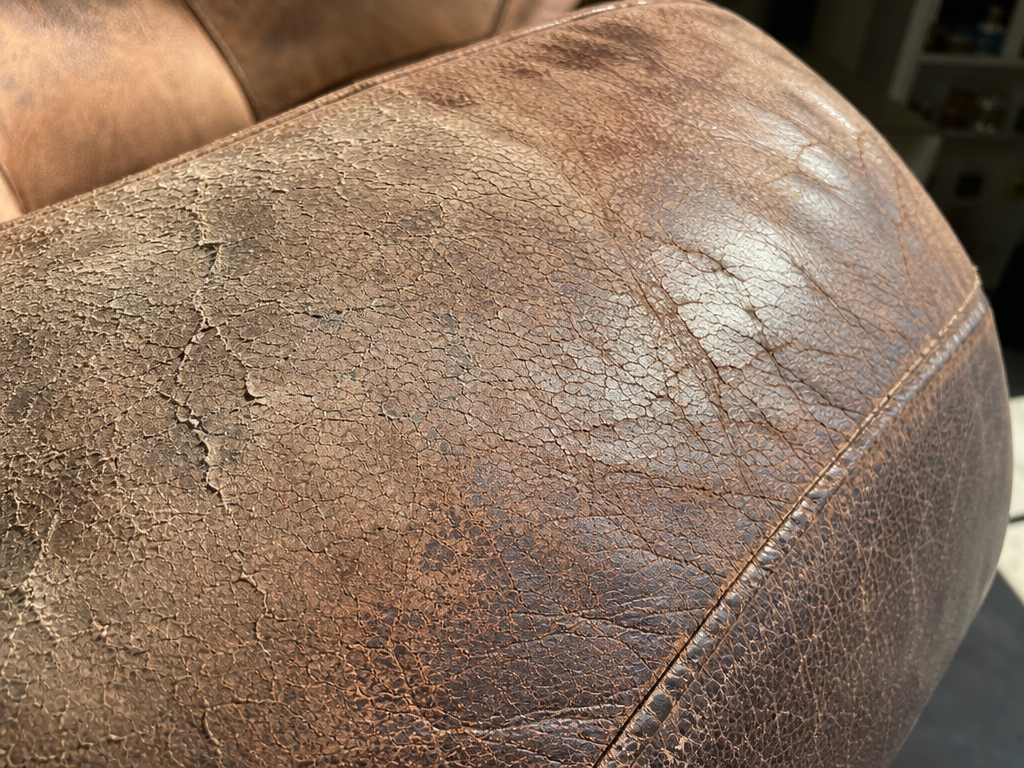
Common Mistakes That Accelerate Damage
Even the best leather can be ruined by improper care. Many well-intentioned owners inadvertently accelerate damage by making one of these common mistakes.
Mistake #1: The Wrong Location
The single biggest mistake is placing leather furniture in direct, sustained sunlight or too close to heat sources like fireplaces or HVAC vents. This positioning directly exposes the leather to the heat and UV radiation that cause fading and rapid drying.
Mistake #2: The Wrong Cleaners and Conditioners
Many common household products are destructive to leather's delicate chemical balance.
Harsh Cleaners: Never use products containing ammonia, vinegar, or detergents. Cleaners containing these ingredients — often found in household sprays and even some wipes — have the wrong pH and can strip the essential oils from the leather, damaging its protective finish and causing it to dry out.
DIY Oils (Olive, Coconut, Mink): Applying pure oils from your kitchen or garage is a damaging mistake. These oils do not properly absorb into the leather's fiber structure. Instead, they clog its pores, attract dust, create a sticky residue, darken the color unevenly, and trap moisture against the hide, which can promote the growth of mold and mildew.
The Petroleum & Silicone Trap: Petroleum distillates are fundamentally drying agents — as they evaporate, they can pull the leather's essential oils out with them, causing the fibers to become brittle and break down. Silicone-based products create a non-breathable plastic-like shield on the surface which clogs the leather's pores, traps dirt and moisture, and can lead to stiffness or mildew.
Mistake #3: Using Too Much Water
Leather should never be soaked with water or cleaner. Applying too much liquid can cause damage to the fibers. If leather gets wet, it should be blotted immediately with a clean, dry cloth and allowed to air dry away from heat or sunlight. Trapped moisture creates a perfect environment for fungal growth, leading to odors and permanent damage.
The Right Way to Protect Your Investment: A Practical Guide
Proper leather care is not complicated, but it does require consistency and the right products. Follow this guide to keep your leather furniture supple, clean, and protected.
Your 5-Minute Leather Health Check
- Is the color lighter in areas exposed to sun?
- Does the surface feel stiff or rough to the touch?
- Are there tiny, hairline cracks appearing in high-stress areas (like seat cushions)?
- Does the leather feel less supple or soft than it used to?
- Does it quickly absorb a tiny drop of water in an inconspicuous spot (indicating dry, porous leather)?
Step-by-Step Care Routine
Dust Regularly
Once a week, wipe down your furniture with a soft, dry microfiber cloth or use a vacuum with a soft brush attachment. This removes abrasive dust and particles that can cause micro-scratches.
Clean Gently
For light cleaning, use a soft cloth lightly dampened with distilled water. For more significant soil, use a pH-balanced, water-based cleaner specifically formulated for your leather type (aniline or protected). Always test any cleaner on a hidden area first to check for discoloration.
Dry Properly
After cleaning, allow the leather to air dry naturally. Never use a hairdryer or place it in direct sunlight, as intense heat will cause it to stiffen and crack.
Condition Appropriately
Conditioning replenishes the essential oils that keep leather flexible. As a general rule, condition protected leather every 6 to 12 months. Aniline leather, being more porous, may need conditioning every 3 to 6 months. Always use a high-quality conditioner designed for your specific leather type — aniline conditioners, for example, should be free of waxes or silicones that would clog its pores.
Quick Reference: Do's and Don'ts
✓ Do
- Dust and vacuum regularly
- Place furniture away from direct sun and heat vents
- Use cleaners & conditioners made for your leather type
- Blot spills immediately with a dry cloth
- Condition every 6–12 months, or as needed
✗ Don't
- Use harsh cleaners like ammonia, vinegar, or soap
- Apply DIY oils like olive or coconut oil
- Soak the leather or use a hair dryer to dry it
- Rely on silicone-based 'sealants' or unverified petroleum products
- Ignore small cracks or signs of fading
Myth vs. Fact: Common Leather Care Misconceptions
Misinformation about leather care is widespread. Here are the facts behind three common myths.
Myth
"Any oil, like mink oil or olive oil, is good for conditioning leather."
Fact
These types of raw oils are not formulated for modern leather upholstery. They can clog the leather's pores, which prevents it from breathing, attracts dirt, causes uneven darkening, and traps moisture against the hide, creating a risk of mold. Always use a properly formulated leather conditioner designed to penetrate and nourish the fibers without leaving a sticky, damaging residue.
Myth
"Leather doesn't need any maintenance; it's tough."
Fact
While durable, leather is a natural skin that will degrade without care. The chemical bonds within its collagen fibers are broken down by heat and UV light, and its essential oils are lost over time. A routine of gentle cleaning and proper conditioning is vital to preserving its strength, flexibility, and appearance.
Myth
"A good silicone 'protector' spray will keep my leather safe."
Fact
Silicone sprays create a non-breathable, plastic-like barrier on the leather's surface. This seal prevents the leather from adjusting to changes in humidity and traps moisture and dirt underneath, which can accelerate deterioration and lead to stiffness or fungal growth. A proper leather protector should nourish the hide, not seal it off from the environment.
When DIY Isn't Enough: Signs You Need a Professional
While a consistent maintenance routine can prevent most issues, some forms of damage are too severe for DIY products to handle. At a certain point, professional tools, materials, and expertise are required to restore the furniture without causing further harm.
It's time to call an expert when you see these signs:
- Deep cracks that have penetrated through the color and top finish
- Widespread or significant color loss from sun fading
- Peeling, flaking, or a sticky feeling on the protective topcoat
- Leather that has become hard, stiff, and brittle
- Persistent odors from mold or mildew that cleaning cannot remove
- Physical damage like tears, holes, or deep scratches
Common Questions
Frequently Asked Questions
Can I use coconut or olive oil on my leather couch?
Absolutely not. This is one of the most common and damaging myths we encounter. While it may seem like a natural solution, household oils like coconut and olive oil can cause long-term damage. They clog the leather's pores, attract dust, can permanently darken the material, and trap moisture, which can lead to mold. Always use a properly formulated leather conditioner designed to penetrate and nourish the fibers without leaving a sticky, damaging residue.
Are silicone-based leather protectors safe to use?
We strongly advise against them. Silicone products create a non-breathable seal on the leather's surface. This traps moisture and prevents the leather from breathing, which can cause it to become stiff or develop mildew over time.
Do petroleum ingredients in conditioners matter?
Our professional assessment is that the risks outweigh any potential benefits. While some products use petroleum distillates as cleaning solvents, these are known drying agents. Over time, they can evaporate from the leather and take its essential natural oils with them, leading to premature cracking and fiber breakdown.
How often should I condition my leather furniture?
A good rule of thumb is every 6 to 12 months. However, this depends on the climate and usage. For more porous leathers like aniline, or for furniture in very dry, hot environments like DFW, you may need to condition every 3 to 6 months. The best indicator is the leather itself — if it starts to feel stiff or look dry, it's time to condition.
Can I fix cracked leather myself?
It depends on the severity. Minor, hairline cracks can often be improved with a high-quality leather conditioner that rehydrates the fibers. However, deep cracks that have broken through the finish require professional repair involving fillers, color matching, and sealing to restore the surface properly.
Will putting a UV film on my windows help protect my leather?
The science is sound. Since UV radiation is a primary cause of fading and chemical degradation, and leather manufacturers specifically recommend keeping furniture out of direct sunlight, a professionally installed UV-blocking window film would logically reduce the main source of damage to your leather furniture.
Residential Upholstery · Fort Worth, TX
Leather Damage Beyond DIY?
We'll Tell You Exactly What It Needs
The Texas sun is relentless, but that doesn't mean your leather furniture has to be a casualty. Bring it in — or text us photos — for an honest assessment and a written quote before any work starts.
View Residential Upholstery Services →What Our Clients Say
Related Articles
Residential
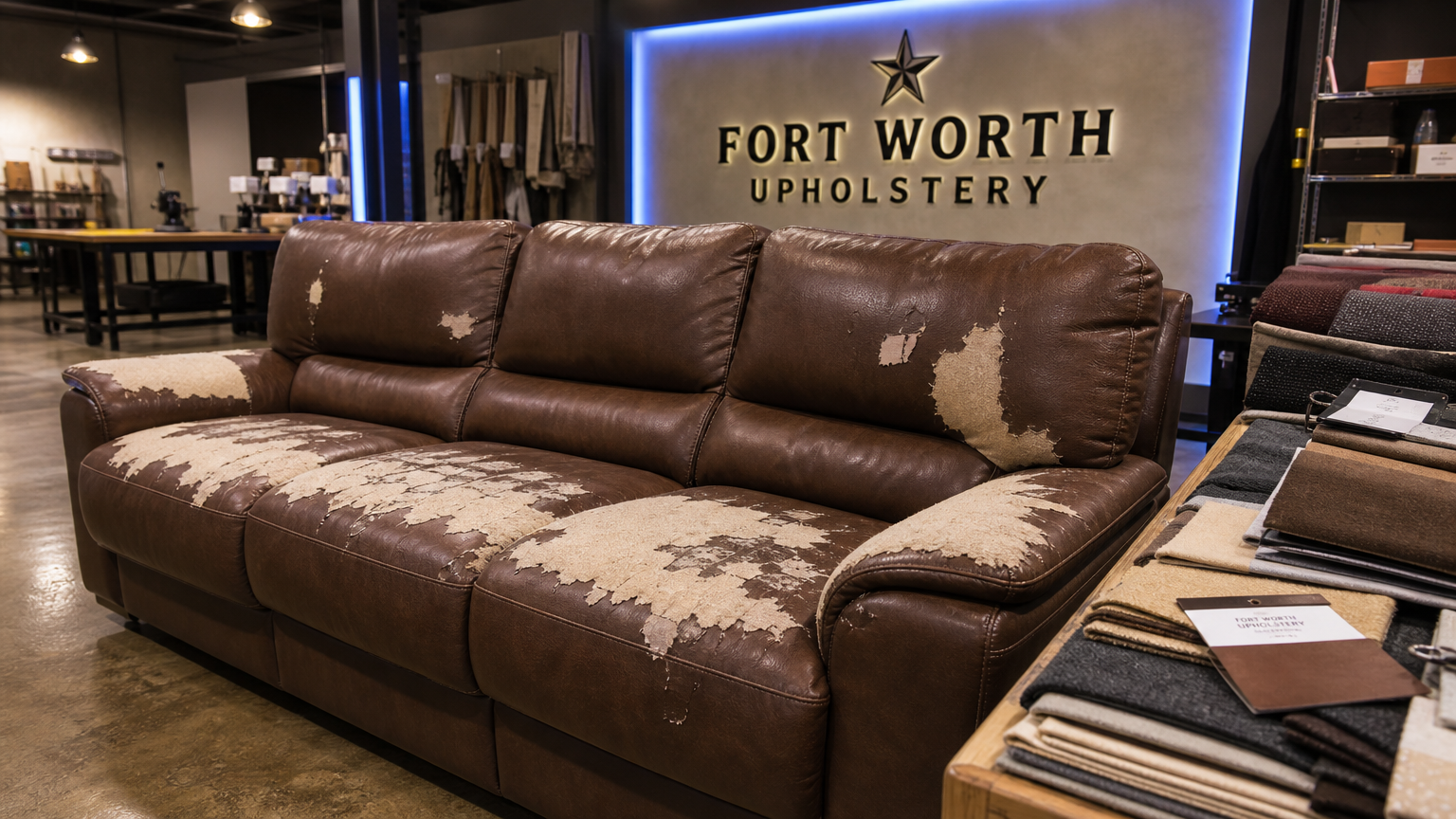
Leather Furniture Repair: What You Can Fix, What You Shouldn't, and When to Call a Pro
Read Article →
Residential
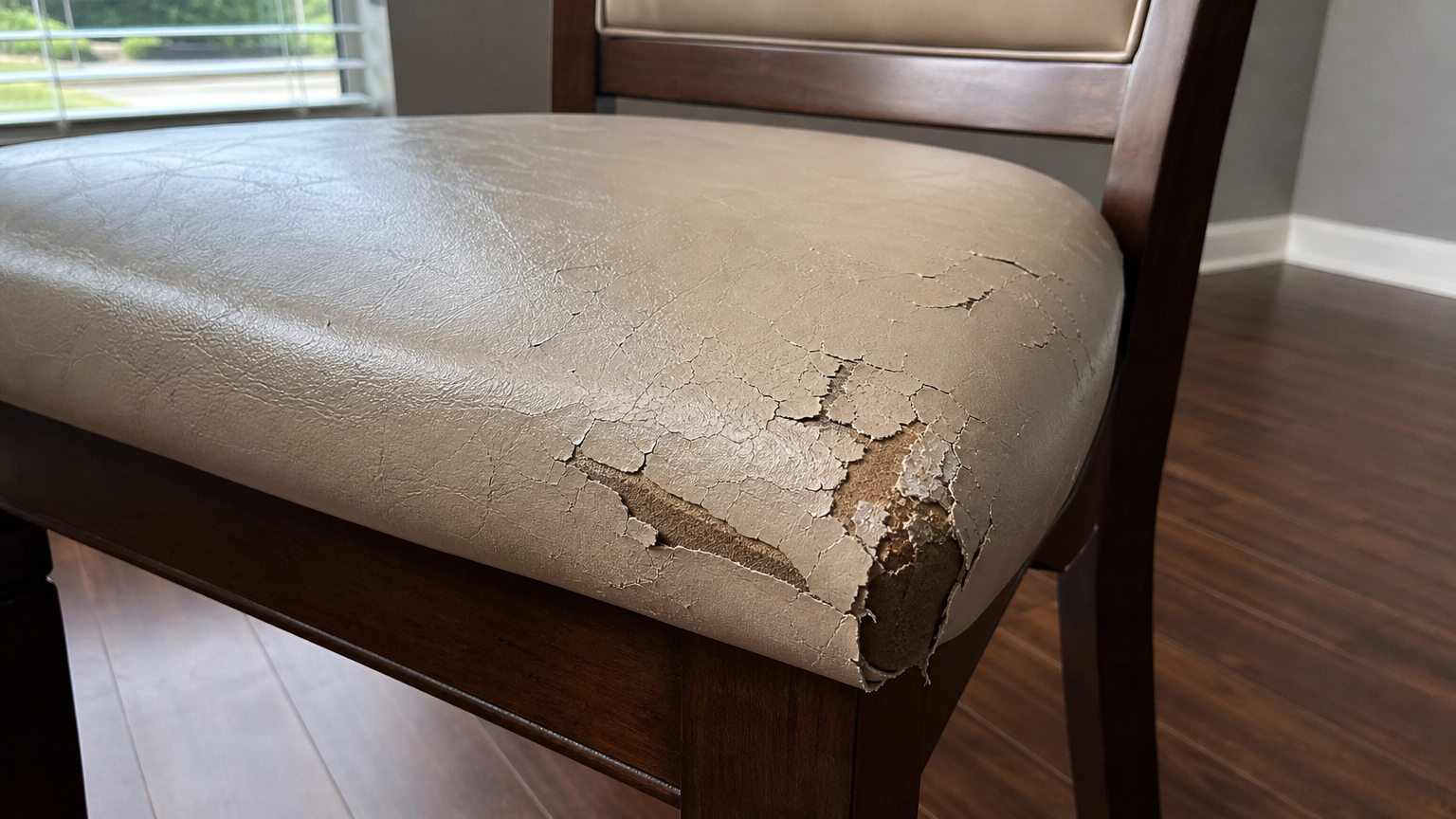
Home Furniture Vinyl Cracking and Peeling: Care, Repair, and When to Reupholster
Read Article →
Residential
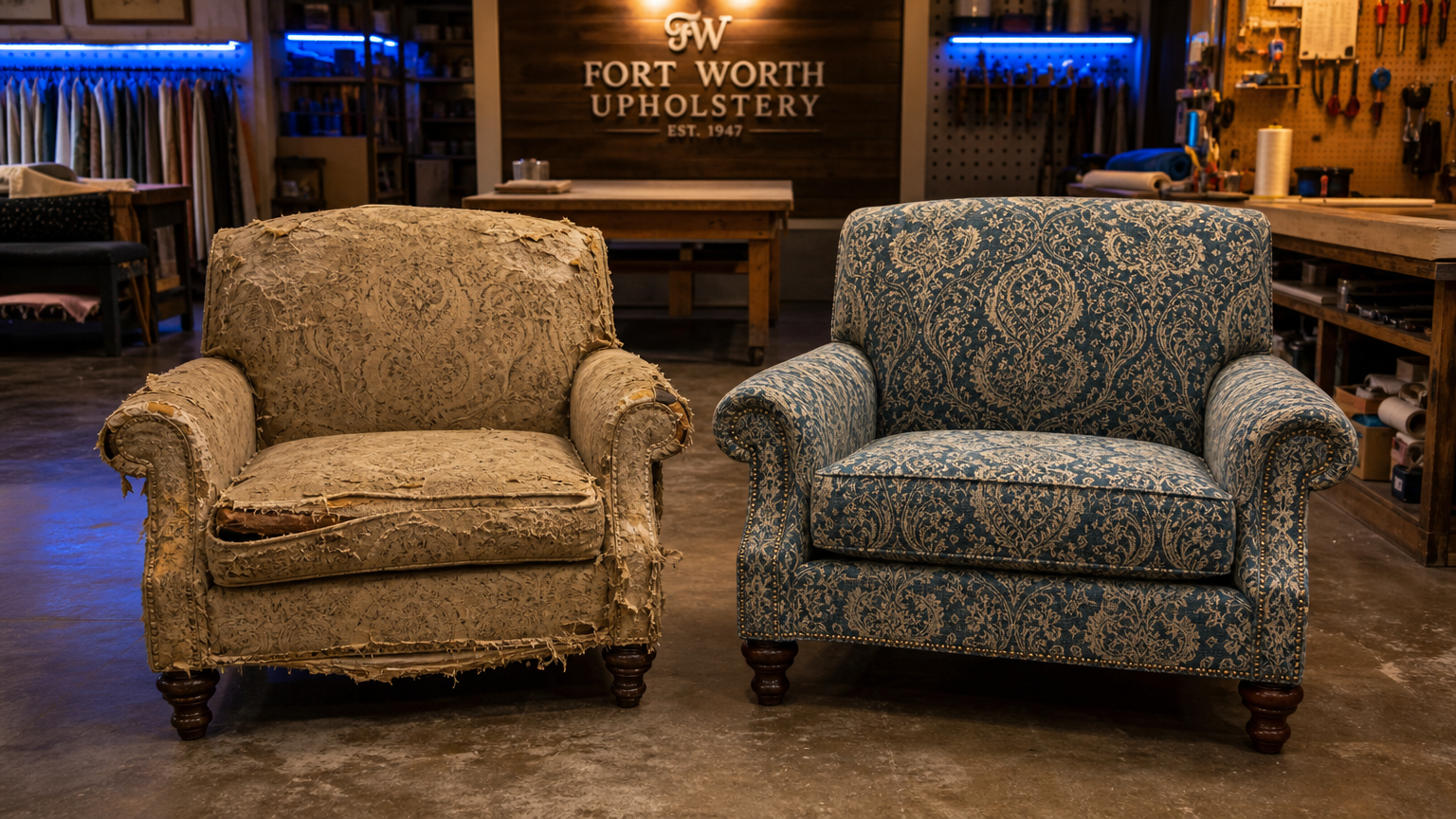
Clean, Reupholster, or Replace? The Cost & Decision Guide for DFW
Read Article →