
My Upholstery Guys · Fort Worth, TX · Commercial Upholstery
The Real Cost of Worn Restaurant Seating — and Why Fort Worth Operators Are Reupholstering Instead of Replacing
Commercial UpholsteryIn the DFW hospitality scene, your front-of-house is a high-stakes environment. From the live-fire kitchens in the Stockyards to the tableside flambe service in downtown Fort Worth or the constant sizzle of fajita skillets in Arlington, the "heat" in a Texas restaurant isn't just a metaphor.
Worn-out booths and chairs do more than diminish your aesthetic; they represent a significant financial and safety dilemma. For most operators, furniture accounts for 10% to 50% of the total facility investment. Protecting this asset isn't just about appearances — it's about managing the science of guest safety. This guide helps DFW owners decide between reupholstery and replacement by looking at the economics of sanitation, smoke toxicity, and fire protection.
The Financial Impact of Degradation: Protecting Your Strategic Investment
Seating is a significant financial investment, and allowing it to degrade is a failure of asset management. However, the true cost of worn upholstery is measured in guest well-being. In a high-traffic DFW dining room, the breakdown of materials isn't just a surface issue; it is a chemical and structural failure.
Reupholstery has become the strategic choice for local operators because it allows the retention of high-quality, existing frames while upgrading the internal components to modern safety and sanitation standards. Instead of a full replacement, reupholstery acts as a critical intervention — replacing "fuel source" materials with protective barriers.
What Worn Upholstery Actually Costs Your Restaurant (Beyond Aesthetics)
Worn upholstery creates hidden pathways for chemical exposure. As materials break down, chemicals of concern migrate into the air and the dust settled on your furniture. Human exposure occurs via inhalation, dermal transfer (surface-to-skin), and ingestion.
This is a critical business argument for family-friendly Fort Worth establishments. The youngest guests are the most vulnerable; children receive their highest dose of chemicals primarily through frequent hand-to-mouth contact with settled dust. Furthermore, worn materials act as a primary "fuel source" in fires — when fabric is compromised, the polyurethane foam padding underneath is exposed, ready to ignite.
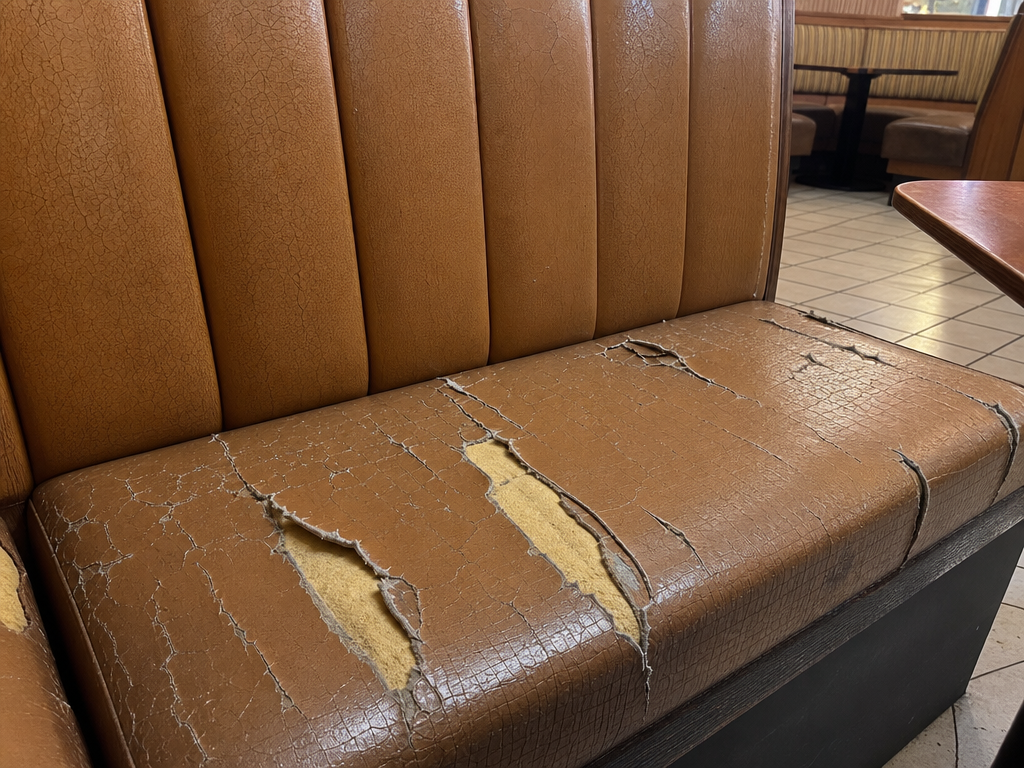
Hidden Cost 1 — Chemical Ingestion
Migration of flame retardants into dining room dust, posing a direct hand-to-mouth risk to children and guests. Daily exposure is linked to thyroid disruption, advanced puberty, reduced fertility, and carcinogenic effects.
Hidden Cost 2 — Smoke Toxicity
Upholstered furniture is the second leading factor enhancing smoke development in fatal fires. Burning synthetics produce lethal gases like hydrogen cyanide, which causes more fire deaths than actual burns.
Hidden Cost 3 — Escalating Liability
Fire death rates have increased by 15% since 1980, largely due to the complex mixture of synthetic materials in modern interiors. Worn seating that has lost its protective barriers is a direct contributor to this risk profile.
Hidden Cost 4 — Flashover Acceleration
In a room with synthetic materials, "flashover" (full room fire involvement) can occur in less than five minutes, compared to significantly longer times for natural materials. Evacuation time shrinks as your seating degrades.
How Restaurant Upholstery Fails: Foam, Fabric, and Frame Breakdown
Layer 1
Foam: The Hidden Fuel Source
Polyurethane foam is essentially solid fuel. UL research demonstrated that chairs without fire barriers lost an average of 37.2 lbs — 55% of their total weight — during fire tests. This mass was consumed by the fire, whereas barrier-protected foam maintained its structural integrity.
Layer 2
Fabric: The Melting Point
Material selection is vital for DFW operators using open flames or candles. Natural fibers like wool and leather are harder to ignite and often self-extinguish. Conversely, the thermoplastics common in commercial furniture — nylon and polyester — tend to melt when exposed to heat. Once the fabric melts, it provides zero protection to the foam fuel source underneath.
Layer 3
Frame: Hardwood vs. Softwood
The frame is your skeleton. To reduce flammability, we recommend metal or hardwood framing. Common softwoods are significantly more susceptible to fire spread and structural failure. If the frame is softwood and degraded, reupholstery is not the right call — the whole unit needs to go.
Sanitation, Flame Standards, and the Hidden Compliance Risk
Many DFW operators mistakenly view the TB 117-2013 label as a "shield" against liability. In reality, TB 117-2013 is a "minimum bar." It is a cigarette smolder test designed to mimic a dropped cigarette — it does nothing to protect your dining room against the flaming ignition of a tipped candle or a kitchen flare-up.
"The standard [TB 117-2013] does not require the residential upholstered furniture to resist flaming ignition nor guarantee a reduced burning rate after ignition such that the fire hazard is mitigated."— Fire and Research Division, National Institute of Standards and Technology (NIST), Technical Note 2129
Relying solely on smolder-resistant labels is a strategic liability. Because 95% of fire deaths occur in the presence of flaming ignition, a commercial environment requires a more aggressive safety strategy: the Fire Barrier.
Material Selection: What Holds Up in High-Traffic Dining
When reupholstering, the Fire Barrier is the gold standard. This is a protective layer of carbons, polyesters, or fiberglass that fully encapsulates the foam.
Reupholster vs. Full Replacement: How to Make the Call
-
Frame Condition
Is the frame metal or hardwood? Keep and reupholster. Is it cheap softwood? Replace the unit — a compromised frame is a fire acceleration risk that a new cover won't solve.
-
Foam Integrity
Is the foam still resilient and intact? It can be encapsulated with a fire barrier. Is it "powdering" or showing chemical migration? Replace the foam — this indicates imminent chemical release.
-
Fabric Type
Are your current synthetics melting or compromised around heat sources? Upgrade to leather, wool, or barrier-protected synthetics during the reupholstery.
-
Sanitation Risk
Do you see "powdering foam" or material migration visible through cracks? This indicates imminent chemical release — the foam must be replaced immediately.
-
Professional Requirement
Installing fire barriers and ensuring proper encapsulation of the fuel source requires professional expertise. This is not a DIY task for a maintenance crew.
Quote-Prep Checklist for DFW Operators
Documentation
Clear photos of all damage, plus precise booth counts and dimensions. This lets us estimate material yardage and labor scope before your consultation.
Specific Issues
Note any "sagging" (foam fatigue) or "powdering" (chemical migration). Both require different interventions and affect the total project scope.
Compliance Goals
State your preference for inherently flame-resistant materials like leather, or the need for specific fire-barrier certifications. We work with manufacturers to confirm options, lead times, and documentation.
Common Questions
Frequently Asked Questions
What is a fire barrier in upholstered restaurant seating?
A fire barrier is a protective layer of carbons, polyesters, or fiberglass designed to delay ignition and reduce the size of a fire by encapsulating the foam padding. It is the gold standard for commercial dining seating — it slows heat release and reduces toxic smoke production without impacting comfort.
Can you feel a fire barrier in a booth seat?
No. If properly specified, a fire barrier does not impact the look, comfort, or hand feel of the furniture. Guests will not notice any difference in seating comfort. The barrier works between the foam and the cover fabric — invisible to the guest, essential to safety.
Why should restaurant operators care about TB 117-2013?
TB 117-2013 is the national standard, but it only tests for smoldering cigarettes. It offers no guarantee of protection against open-flame hazards like tipped candles or kitchen fires. Because 95% of fire deaths occur in the presence of flaming ignition, a commercial environment requires more than the minimum bar.
Are flame retardant chemicals in furniture dangerous?
Yes. Daily exposure is linked to serious health risks, including thyroid disruption, advanced puberty, reduced fertility, and carcinogenic effects. This is a particular concern for family-friendly establishments where children have frequent hand-to-mouth contact with settled dust — the primary exposure pathway for the youngest guests.
How fast can a fire spread in a room with synthetic furniture?
Flashover can occur in less than 5 minutes when synthetic materials are present. UL research found chairs without fire barriers lost an average of 37.2 lbs — 55% of total weight — in fire tests. Natural materials provide significantly more evacuation time. The gap in outcomes is not marginal; it is substantial.
What materials are inherently flame-resistant for restaurant seating?
Natural fibers such as wool, silk, and leather are more difficult to ignite and may self-extinguish. Thermoplastics like nylon and polyester tend to melt under heat, which removes the fabric barrier and exposes the foam fuel source. For dining rooms with candles or open-flame service, natural or barrier-protected materials are the appropriate choice.
Commercial Upholstery · Fort Worth, TX
Don't Wait for a Safety Incident
to Upgrade Your Dining Room
Safeguard your investment and prioritize the health of your guests. Contact My Upholstery Guys today for a professional commercial quote. We'll ensure your DFW restaurant meets the highest standards of safety, durability, and guest experience.
View Commercial Upholstery Services →What Our Clients Say
Related Articles
Residential
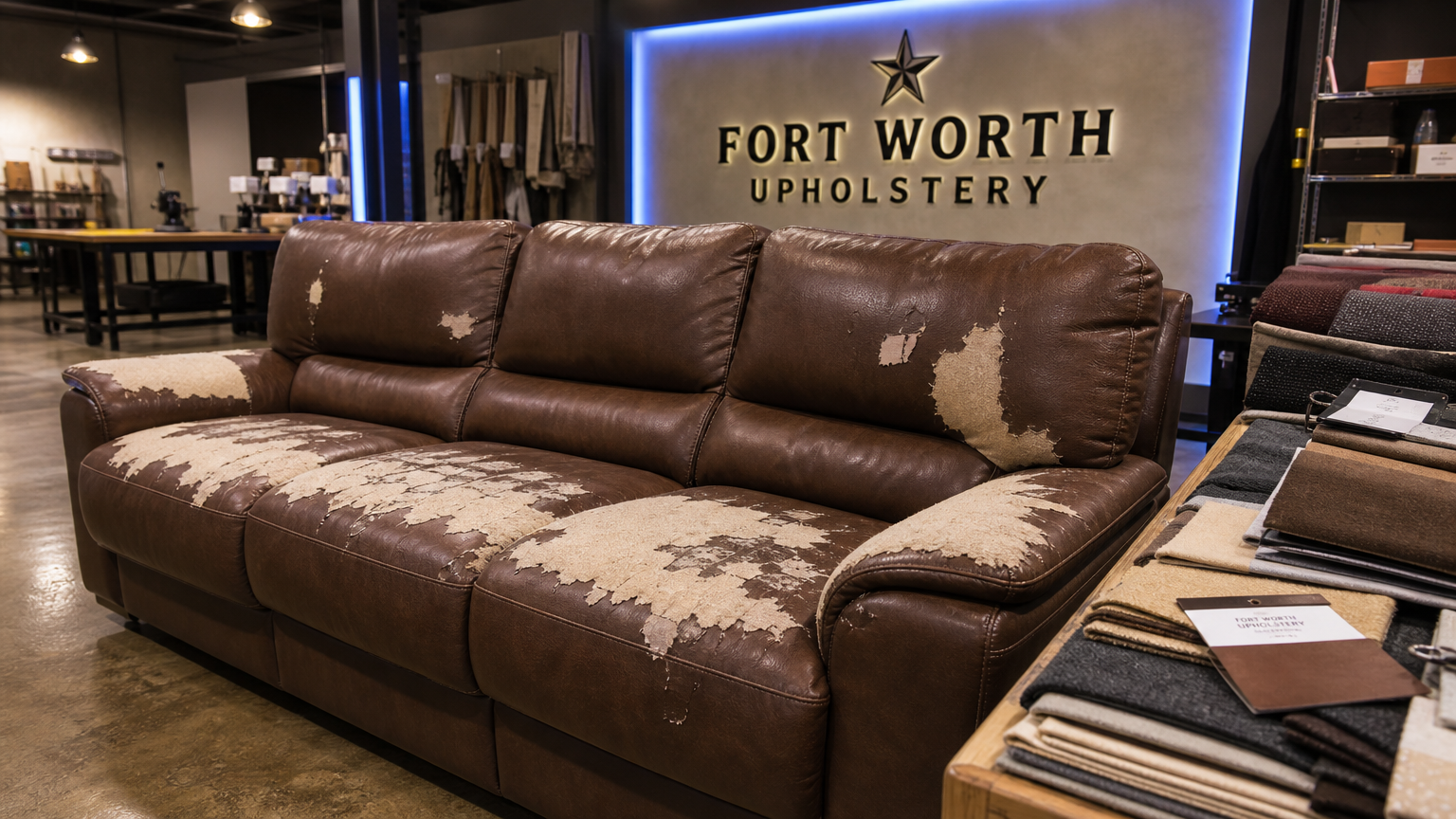
Leather Furniture Repair: What You Can Fix, What You Shouldn't, and When to Call a Pro
Read Article →
Residential
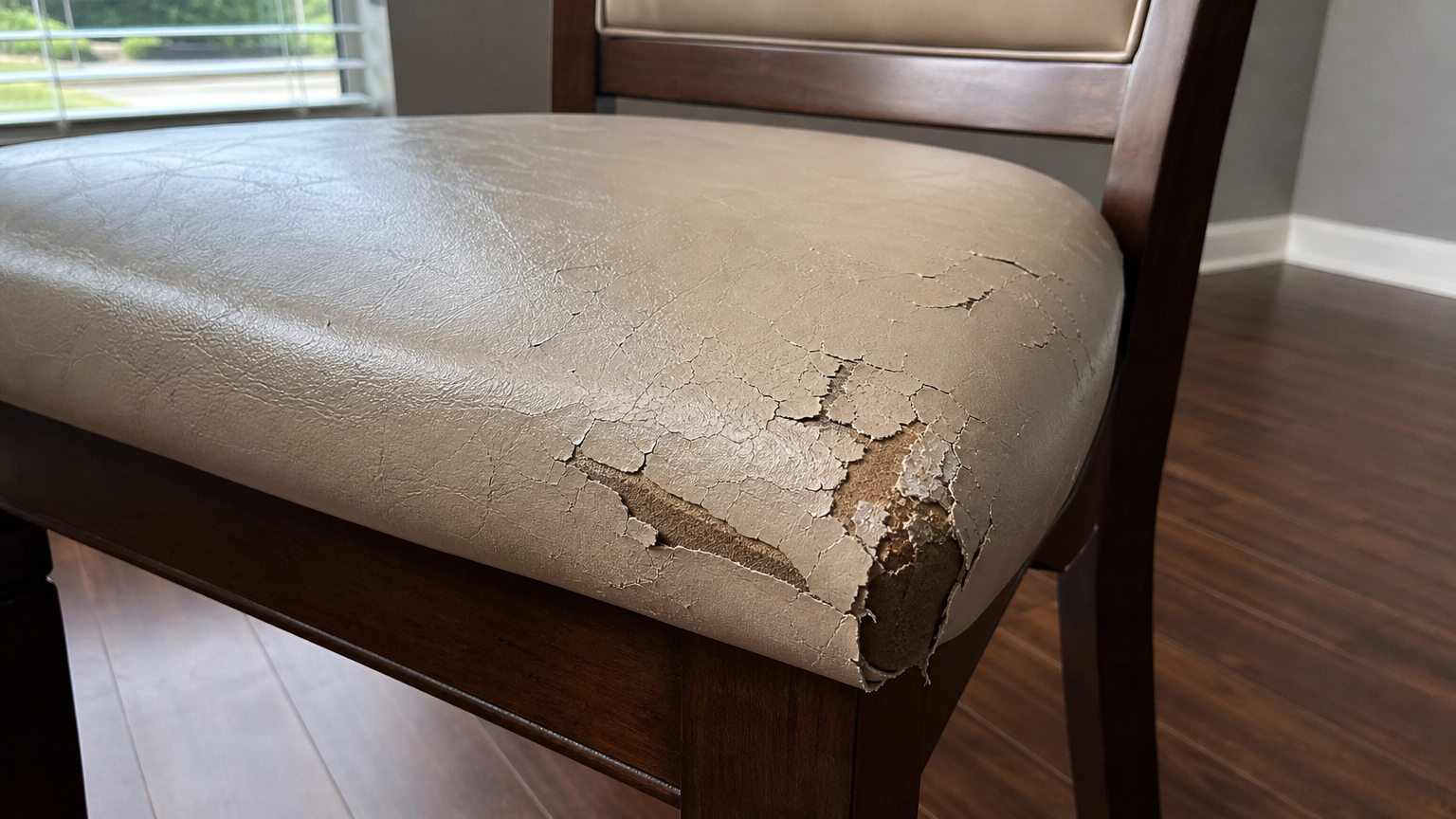
Home Furniture Vinyl Cracking and Peeling: Care, Repair, and When to Reupholster
Read Article →
Residential
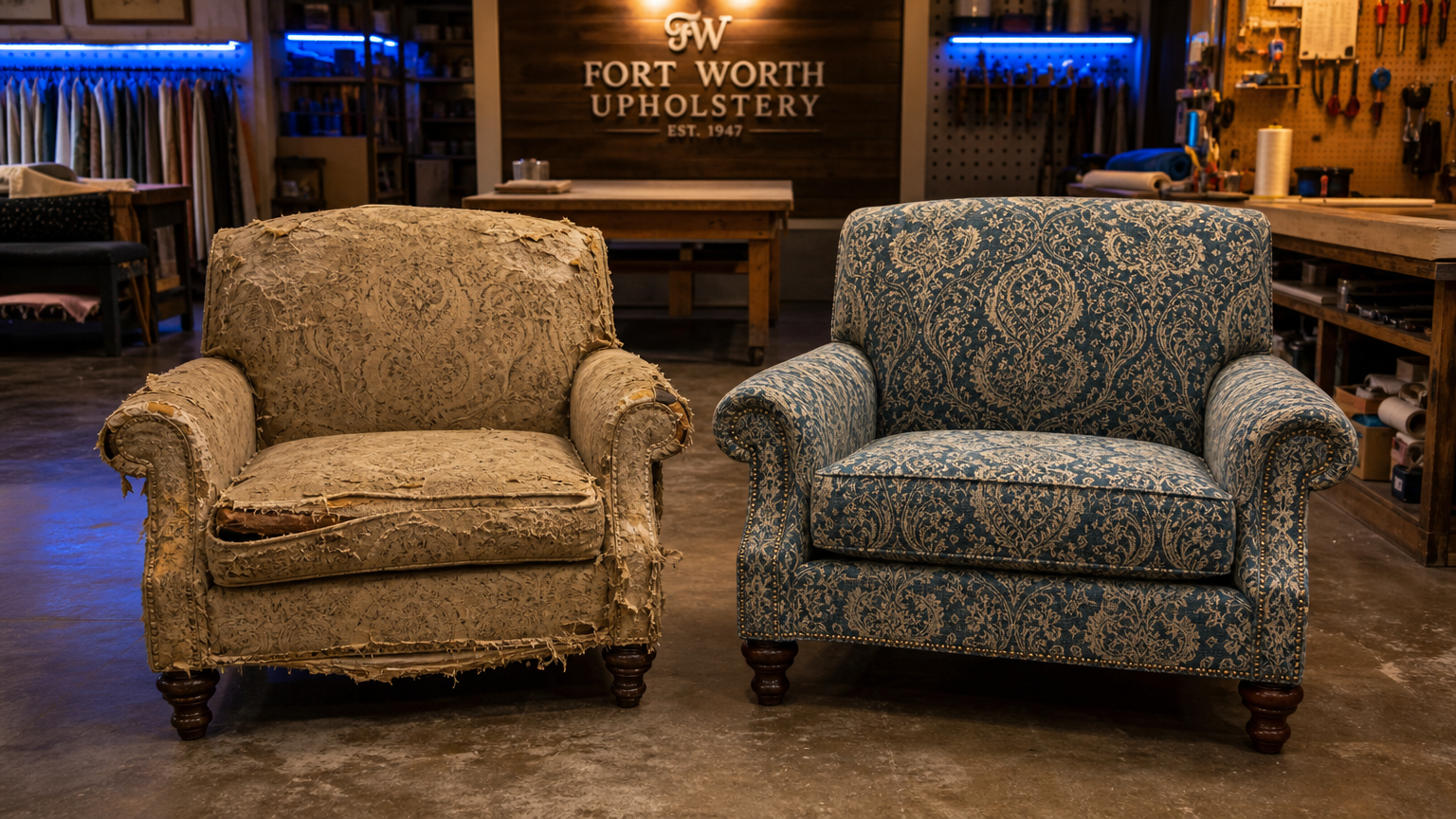
Clean, Reupholster, or Replace? The Cost & Decision Guide for DFW
Read Article →